
Executive Summary
- Technology’s role in planning – Advanced imaging and digital planning tools can help create a detailed, patient-specific view of the joint and inform decisions about implant size, positioning, alignment, and bone preparation.
- How planning starts – Before a robotic joint replacement, the surgical team takes into account the patient’s symptoms, diagnosis, and treatment goals, then conducts imaging to build a plan around their specific anatomy.
- Transitioning from planning to execution – During surgery, robotic systems can provide guidance and real-time information that helps the surgeon carry out the planned procedure and assess key factors as the operation progresses.
Planning Starts Before the Operating Room
A robotic joint replacement procedure begins with a surgical plan developed before the patient enters the operating room. The planning process starts with understanding the patient’s diagnosis, symptoms, anatomy, joint damage severity, and goals for treatment. These factors help the surgeon determine whether joint replacement is appropriate and, if so, how the procedure should be approached.
Robotic technology usually plays a key role in planning; it’s not just used during the surgery itself. In many robotic-assisted arthroplasties, computer software is used to turn advanced imaging into three-dimensional models of the joint that can be referenced before and during surgery.
The guide below is designed to give patients a better idea of what to expect if they have an upcoming robotic joint replacement surgery. Nevertheless, the approach to planning can vary depending on the type of procedure and the robotic system being used, making it important to talk to your care team about your specific surgical plan.
What Happens Before Imaging Enters the Picture
Imaging plays an important role in getting information about the joint and determining the appropriate approach, but it is only one part of the surgical planning process. Care teams usually start with discussions and physical examinations to learn about the patient’s overall health.
Some things surgeons may learn about their patients during this early planning stage are:
- If they have had any previous surgeries
- Whether or not there is existing hardware
- How active they are in their day-to-day life
- What symptoms they are dealing with
- Their goals for recovery
These factors can influence the surgical strategy even when the same robotic technology is being used. For example, previous procedures can change the shape or structure of the joint, meaning it may affect implant placement. The patient’s goals also provide important context, as someone hoping to return to recreational activities may have different functional priorities than someone primarily focused on relieving joint pain and improving everyday mobility.
This broader assessment helps ensure that the surgical plan is based on the patient as a whole rather than on imaging or robotic measurements alone.
Using Technology to Build a Patient-Specific Surgical Plan
After an initial assessment, surgeons may use computed tomography (CT) scans, X-rays, magnetic resonance imaging (MRI), or other imaging and mapping technologies to understand the patient’s anatomy better. Many robotic systems used for joint replacements use preoperative imaging to generate a three-dimensional model that can support planning before surgery.
This information can help the surgeon evaluate factors such as:
- Bone shape and structure
- Joint alignment
- Areas of cartilage or bone damage
- Anatomical variations
Using the resulting model, it is usually easier for the surgical team to estimate implant size and positioning and the amount and location of bone that may need to be removed.
How Imaging Is Turned into a 3D Model
MRIs, which are one of the most common types of medical imaging preceding joint-related procedures, come out as multiple frames showing different views of the same joint. Each frame represents a two-dimensional cross-sectional “slice” through the body. After imaging is complete, advanced computer systems can precisely stack these frames atop one another to reconstruct a three-dimensional representation of the patient’s anatomy, giving the surgical team a more detailed view of the joint from different angles.

Planning Implant Position and Bone Preparation
A significant part of preparing for joint replacement surgery is ensuring the existing joint will be able to accommodate the replacement components. To satisfy this step, the surgeon may use the imaging results or 3D model to iron out details like:
- The size and position of the implant
- Appropriate alignment
- The areas of bone that need to be prepared
- How the components will relate to the patient’s surrounding anatomy
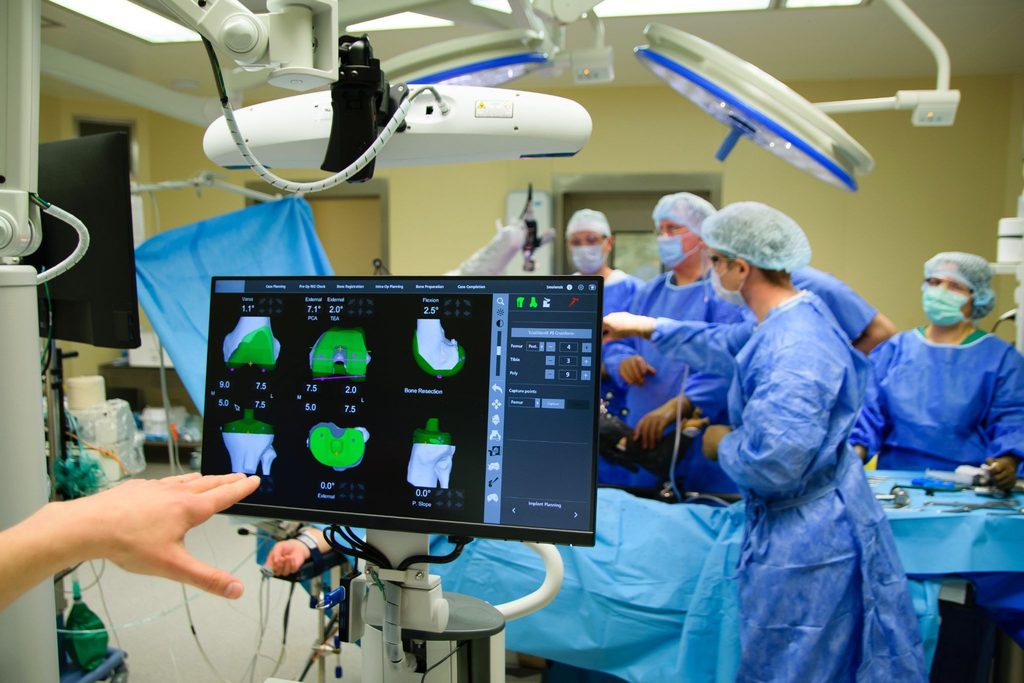
For knee replacement, for example, planning can include the positioning of the femoral and tibial components as well as the angles and locations of planned bone resections. Some robotic systems also allow the surgeon to assess the relationship between the implant components and the soft tissues around the knee.
The Same Measurements Don’t Work for Every Patient
Each person’s anatomy and joint condition can differ; that is why experienced surgeons like Dr. Shane Martin use available imaging and clinical information to develop a surgical plan that accounts for those differences. This patient-specific approach can also give the surgeon an opportunity to consider the intended position of the components before making bone cuts. During the procedure, the surgical plan can then be compared with information obtained from the patient’s actual joint.
An Individualized Surgical Plan You Can Trust
The Scottsdale Center for Robotic Surgery uses advanced robotic systems to strategically create a unique roadmap for each patient that promotes surgical precision.
From Surgical Plan to Robotic-Assisted Execution
Once the surgical plan has been developed, it becomes part of the information the surgical team uses in the operating room. Depending on the robotic platform, the system can provide visual guidance, navigation, measurements, or other forms of feedback during the procedure, which is one of the many advantages robotics have over manual instrumentation.
The technology may also help the surgeon evaluate alignment and soft-tissue balance as the procedure progresses. Some systems even provide information about the relationship between the planned component position and the patient’s actual anatomy, allowing the surgeon to make adjustments when appropriate.
Nevertheless, robotic assistance does not replace the surgeon—the system provides information and guidance, while the surgeon uses clinical judgment to determine how to proceed, remaining in control throughout the entire procedure.
When the Surgical Plan Needs to Change
A preoperative surgical plan provides a framework for the procedure, but it does not prevent the surgeon from responding to information discovered during surgery. Once the joint is exposed, the surgeon can directly assess the anatomy and surrounding tissues and compare those findings with the information available before the operation.
Intraoperative measurements and robotic guidance can provide additional information that was not available from preoperative imaging alone, further improving surgical precision in many cases. Depending on the robotic platform and procedure, this may include information about alignment, bone anatomy, or soft-tissue balance. If those findings differ from what was anticipated, the surgeon can determine whether an adjustment to the plan is appropriate.
How Surgeons Turn Data Into Decisions
A robotic joint replacement procedure can involve several sources of information. To break it down:
- Preoperative imaging may provide a detailed view of the patient’s anatomy
- Digital models can help visualize the joint and plan component positioning
- Intraoperative registration and measurements can provide additional information once the surgeon is working directly with the joint
These pieces of information are considered together rather than treated as a single automatic answer. The surgeon must account for the patient’s anatomy, extent of joint damage, alignment, soft tissues, and goals of the reconstruction when determining the appropriate surgical strategy.
This is one reason robotic technology is best understood as a set of tools that supports surgical planning and execution. In many computer-navigated knee replacements, the surgeon retains the ability to adjust component size and position, bone resection, and other aspects of the procedure based on the computer model and real-time feedback.
Understanding What Goes Into a Robotic Joint Replacement Plan
If you are considering robotic-assisted joint replacement, understanding the planning process can help you have a more informed conversation with your orthopedic surgeon. Rather than focusing only on the robotic technology itself, ask how the technology is incorporated into your overall surgical plan.
Some questions you may want to ask are:
- How is my individual anatomy evaluated before surgery?
- What type of imaging or mapping technology will be used for my procedure?
- How is my implant size and positioning determined?
- How does my surgical plan account for my individual anatomy and joint damage?
- Can the plan be adjusted based on information collected during surgery?
- What role does the robotic system play, and what decisions remain with my surgeon?
The answers can vary depending on whether you are having a hip, knee, or other joint replacement and which robotic platform your surgeon uses—not every robotic system works in exactly the same way, so understanding the specific technology being used can provide a clearer picture of what to expect.
Setting Yourself Up for the Best Surgical Outcomes Possible
With the countless advantages robotic-assisted surgery can offer, it is a good idea for many people with joint complications to consider robotic-assisted joint replacements at a well-equipped facility like the Scottsdale Center for Robotic Surgery. Our knowledgeable team is ready to help patients learn more about how advanced imaging, patient-specific surgical planning, and robotic technology can be incorporated into their procedures if they are a suitable candidate.
Schedule a consultation with us to discuss your anatomy, treatment options, and how your surgeon would develop a personalized surgical plan for your procedure.